Table of Contents
- Why Your Hair Extensions Look ‘Obvious’ (And How to Fix It)
- Our Professional Expertise and Credentials
- Transparency and Salon Safety Standards
- Defining the Technique: What is Custom Color Mapping for Hair Extensions?
- The Physics of the Blend: How Color Mapping Works During Application
- Custom Color Mapping vs. Standard Shades: A Comparison
- Achieving the ‘Lived-In’ Look: The Role of Hand-Tied Extensions
- The Milk & Honey Methodology: Behind the Scenes in Cary
- Frequently Asked Questions About Color Mapping
- Limitations & Considerations for Custom Mapping
- Conclusion: Ready for Your Invisible Transformation?
Why Your Hair Extensions Look ‘Obvious’ (And How to Fix It)
The most common complaint among women in the Triangle area is the visible “disconnect” or “shelf” where natural hair ends and extensions begin. As a local pillar in the MacGregor Village community, we understand the specific aesthetic standards of our Cary and Raleigh clientele. This disconnect occurs because standard matching relies on a single-dimensional color box that fails to account for the way light interacts with hair. To achieve a truly high-end result, you must understand how to blend hair extensions for a natural look through advanced color theory.
At Milk & Honey – The Hair Lounge in MacGregor Village, we serve high-income professionals who demand discretion and sophistication. Whether you are attending a board meeting in Downtown Raleigh or an evening event at Koka Booth Amphitheatre, your extensions should be your best-kept secret. The “secret to invisible hair extensions with color mapping” lies in the transition between your natural root and the added length, a nuance that off-the-shelf shades simply cannot replicate.
Our Professional Expertise and Credentials
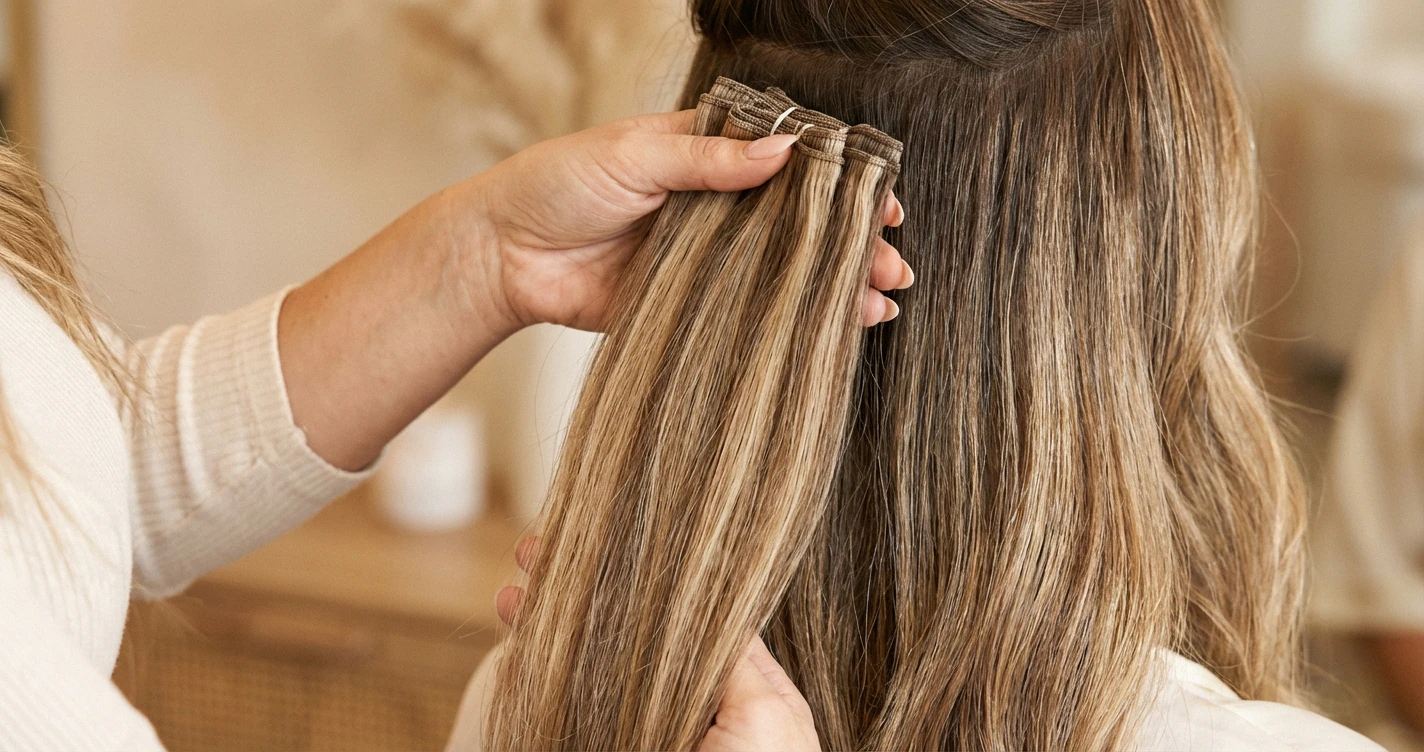
Our lead extension specialists at Milk & Honey – The Hair Lounge are certified in multiple luxury hand-tied methods, including NBR and IBE. With years of industry experience and deep first-hand knowledge of salon services, we prioritize ongoing education to master the intersection of chemical color and physical hair application. Our team regularly attends advanced workshops to ensure our clients receive the most modern, safe, and aesthetically superior transformations available in North Carolina.
Transparency and Salon Safety Standards
All stylists at Milk & Honey – The Hair Lounge are fully licensed under the North Carolina State Board of Cosmetic Art Examiners, adhering strictly to NC General Statutes Chapter 88B. To ensure client safety during long extension and color sessions, our salon maintains rigorous OSHA standards and uses EPA-registered disinfectants for all tools and surfaces. We believe that luxury service must be built on a foundation of uncompromising professional standards and regulatory compliance, a core part of our mission to build lasting trust with every guest.
Defining the Technique: What is Custom Color Mapping for Hair Extensions?
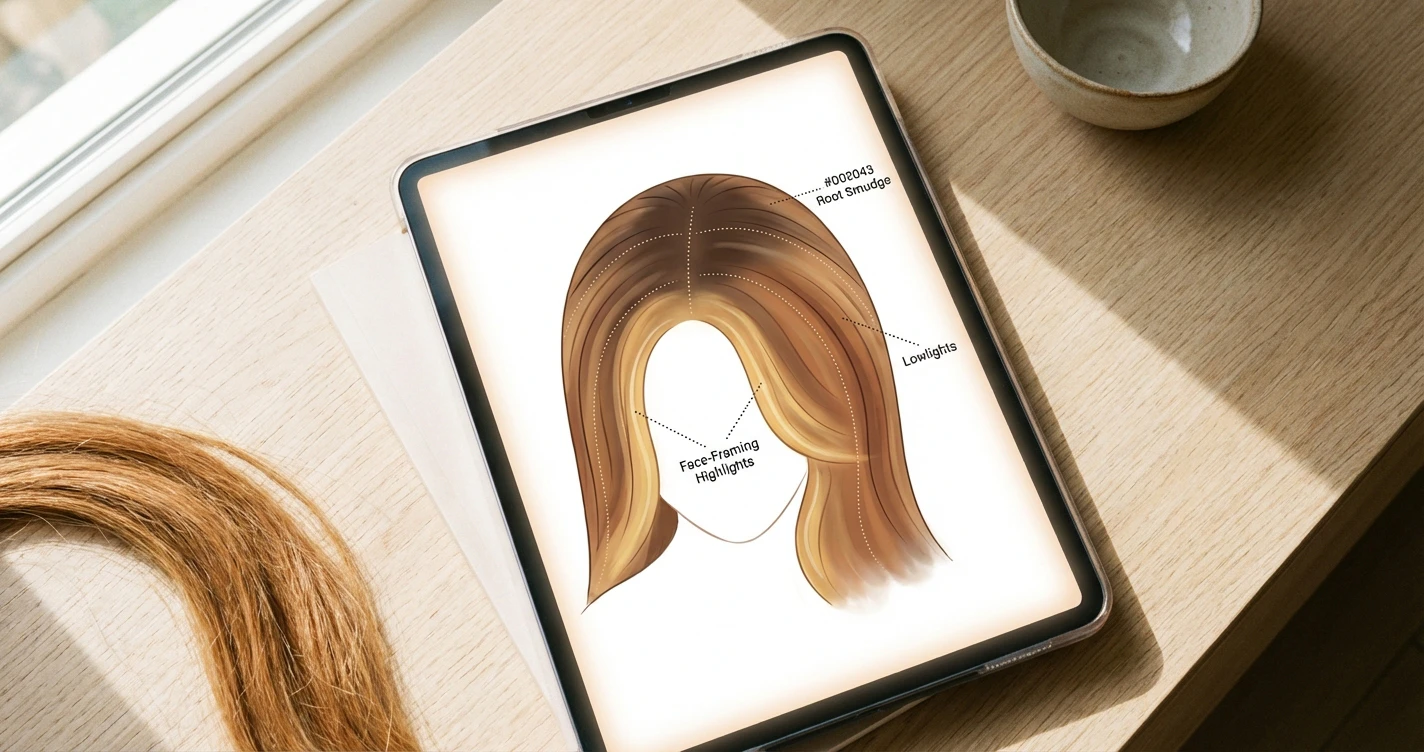
Custom color mapping is a sophisticated visual and physical blueprint of the scalp used to determine the exact placement of varying hair tones. Unlike traditional methods that aim for a “close enough” match to a single swatch, mapping acknowledges that natural hair contains a spectrum of shadows, mid-tones, and highlights. By utilizing Hair Color Mapping Ideas on Pinterest, stylists can visualize how different wefts will interact once installed.
- The core of this technique is the “Triple-Tone Rule,” which dictates that a seamless blend requires at least three distinct levels of color:
- The Root Shade: Matches the client’s natural or colored base to ensure the “grow-out” is undetectable.
- The Transitional Mid-Tone: Bridges the gap between the root and the ends, often incorporating the client’s secondary tones.
- The Pop/Highlight: Mimics sun-kissed ends or adds brightness to the overall look without the need for chemical bleaching on the natural hair.
According to Hair Color Education For Stylists, understanding the molecular behavior of dyes on different hair porosities is essential for mapping. This is why custom color mapping makes extensions look real; it treats the extension hair as a canvas that must be integrated into the existing biological color landscape of the client.
The Physics of the Blend: How Color Mapping Works During Application
Achieving undetectable hair extensions requires more than just good color; it requires a physical understanding of how hair falls and moves. The process begins with a 360-degree tonal analysis during the initial consultation. As recognized experts in the Raleigh-Durham area, we examine how your hair looks in the bright North Carolina sun versus the fluorescent lighting of a corporate office to ensure total visual consistency.
As discussed in the Color Map for Hairdressers Podcast, the application involves “Sandwiching and Stacking.” This is one of the best techniques for seamless hair extension blending. By stacking 3-5 different colored wefts on top of each other, we create a vertical gradient. For example, a dark-rooted weft might be placed underneath a bright blonde weft to create a “peek-a-boo” effect that mimics natural hair density and depth.
| Step | Action | Purpose |
|---|---|---|
| 1 | 360-Degree Consultation | Analyze hair movement and light reflection from all angles. |
| 2 | Palette Selection | Choose 3-5 weft colors ranging from root-smudged to high-bright. |
| 3 | Custom Coloring wefts | Can hair extensions be custom colored to match highlights? Yes, we often hand-paint wefts. |
| 4 | Stacking & Layering | Physically layering different colors to create a 3D gradient. |
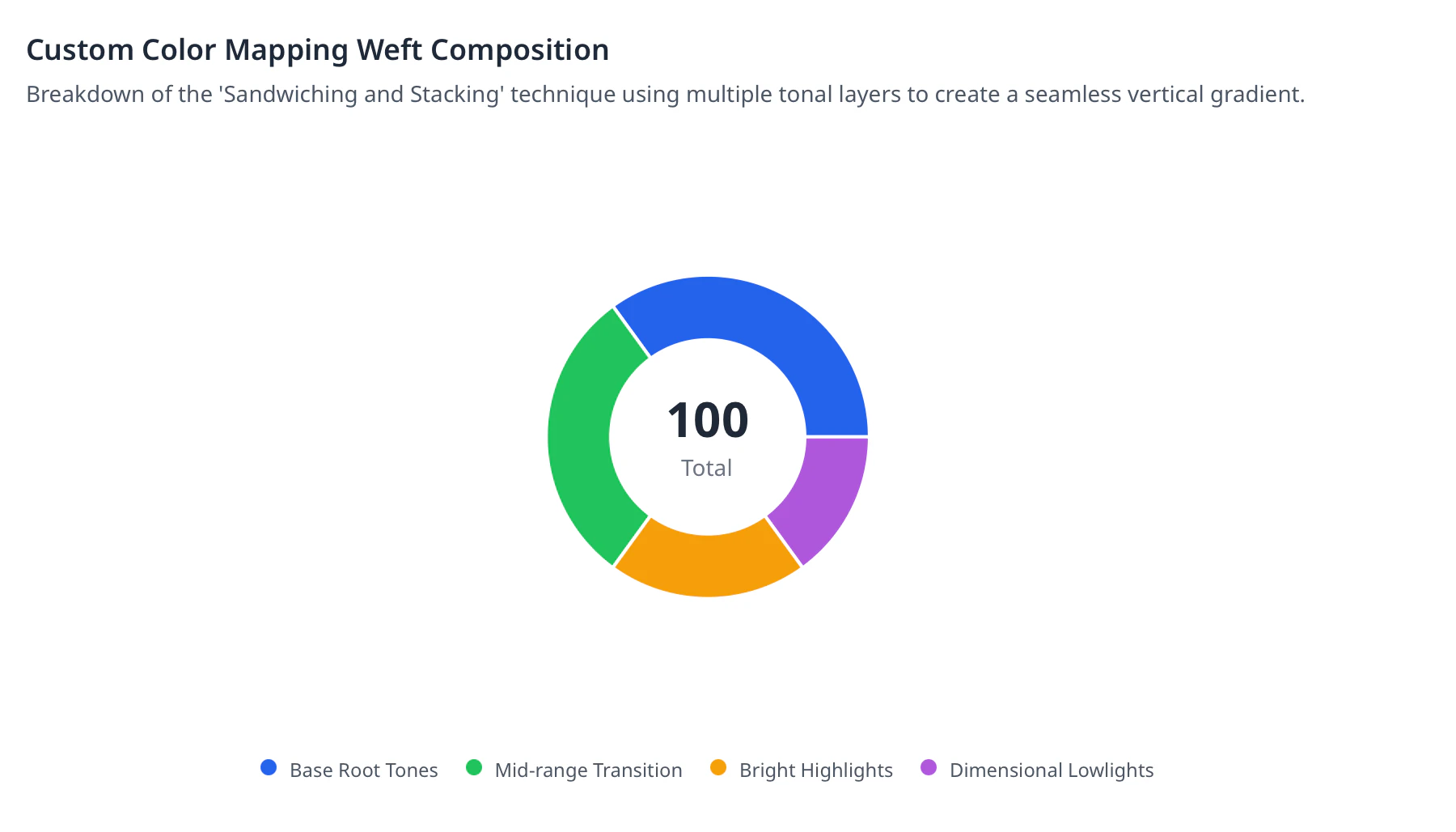
Breakdown of the ‘Sandwiching and Stacking’ technique using multiple tonal layers to create a seamless vertical gradient.
Custom Color Mapping vs. Standard Shades: A Comparison
The difference between standard extension matching and custom mapping is the difference between a “one-size-fits-all” suit and a bespoke Italian garment. Standard matching often results in a “solid” block of color that sits on top of the natural hair, creating a visible line of demarcation. Custom mapping, however, curates a palette specifically for your unique DNA.
| Feature | Standard Extension Matching | Custom Color Mapping |
|---|---|---|
| Color Variety | 1-2 pre-dyed shades | 3-5 bespoke shades |
| Natural Appearance | Low (Visible “Extension Line”) | High (Indistinguishable from natural hair) |
| Longevity of Blend | Fades unevenly with natural hair | Fades in harmony with natural tones |
| Initial Investment | Lower | Higher (Reflects skill and hair volume) |
| Stylist Skill Level | Basic | Advanced Colorist/Extension Specialist |
While standard matching is a faster process, it is rarely the most natural looking hair extension color method. For women who want to wake up and go without worrying if their “tracks are showing,” the investment in mapping is indispensable.
Achieving the ‘Lived-In’ Look: The Role of Hand-Tied Extensions
Custom color mapping reaches its full potential when paired with hand-tied extensions. Because hand-tied wefts are exceptionally thin and lightweight, they allow for more intricate “stacking” without adding bulk to the scalp. This thinness is the canvas upon which we paint our color map. If you are comparing Balayage vs. Highlights: Which Hair Coloring Technique is Right for, your mapping will be adjusted to reflect that specific style’s growth pattern.
In our experience, tape-in or clip-in extensions lack the structural flexibility needed for true color mapping. They are too thick to stack effectively, which often leads to “spotty” color distribution. Hand-tied wefts, however, can be layered to create a seamless transition from a dark North Carolina root to a bright, beachy end. For full transparency regarding the investment required for this level of detail, we encourage clients to review The 2026 Hair Extension Price Guide: What to Expect for Your.
The Milk & Honey Methodology: Behind the Scenes in Cary
At Milk & Honey – The Hair Lounge, our methodology is rooted in the unique lifestyle of the Triangle. We understand that a Cary-based professional’s hair must withstand the high humidity of a North Carolina summer while maintaining the sleekness required for a high-stakes presentation. Our “Color Integrity” check, a standard we’ve refined through deep niche specialization, ensures that your map looks perfect regardless of the environment.
When we design a map, we don’t just look at your hair in the salon chair. We consider how the color will expand if your hair gets frizzy in the humidity. To combat this, we often recommend a Brazilian Blowout as a preparatory step. This ensures the texture of your natural hair matches the sleekness of the extensions, preventing the color map from being “broken” by texture differences.
One common mistake we see from less experienced stylists is failing to account for “hair expansion.” When hair swells due to moisture, the color map can shift, making the extensions visible. We mitigate this by using a “tension-free” mapping technique that allows the hair to move naturally while keeping the color layers aligned. Drawing from our robust library of specialized guides and first-hand technical experience, we have discovered that the strategic placement of fewer, perfectly colored wefts actually creates a more “lived-in” and believable look than simply adding more hair.

Frequently Asked Questions About Color Mapping
How do stylists achieve undetectable hair extensions?
Stylists achieve this by using custom color mapping to match the extensions to the natural hair’s root, mid-lengths, and ends. By layering multiple wefts of slightly different shades, they eliminate the solid “block” of color that typically makes extensions visible.
What is the healthiest hair extension method?
Hand-tied extensions combined with custom mapping are widely considered the healthiest method. The lack of adhesives or high-heat tools protects the natural hair, while the mapping ensures fewer wefts are needed to achieve a full, natural look, reducing weight on the scalp.
Can people tell I have extensions?
With professional color mapping, it is nearly impossible for an untrained eye to detect extensions. The blend is so seamless that the extensions move, shine, and fade exactly like your natural hair.
How many colors are used in a custom map?
Typically, we use 3 to 5 different colors. This includes a base color, a lowlight for depth, and 1-3 highlight shades to create the “sun-kissed” effect common in modern lived-in color.
Is color mapping more expensive than standard matching?
Yes, it requires a higher initial investment. This reflects the advanced training of the stylist and the need to purchase multiple packs of high-quality hair to create the custom palette.
Limitations & Considerations for Custom Mapping
While custom color mapping is the gold standard for invisible extensions, it does require a commitment to maintenance. As your natural hair grows, the “root” of your map will move down. To keep the blend seamless, we recommend a “toner refresh” every 6 to 8 weeks. This ensures that the transition between your natural hair and the extensions remains blurred.
Additionally, mapping is an advanced skill. Not every salon in Raleigh or Apex has the technical training to execute a “Triple-Tone” map. It requires an artistic eye and a deep understanding of color chemistry. If you choose to change your base color significantly, your entire extension map may need to be reconstructed to maintain the “invisible” effect.
Conclusion: Ready for Your Invisible Transformation?
Custom color mapping is the ultimate secret to hair that looks like yours, only better. By moving away from the “one-color” approach of the past and embracing a technical, multi-tonal blueprint, you can finally achieve the length and volume you desire without the fear of visible tracks. Whether you are looking for a subtle enhancement or a dramatic change, our team is here to guide you through the process with the expertise that has made us a trusted name in the Triangle.
Ready to experience the most natural-looking hair of your life? Book Your Transformation at Milk & Honey – The Hair Lounge in MacGregor Village today.
Written by Ashley Vargo Reviewed by Ashley Vargo